VPN and Remote Access Security
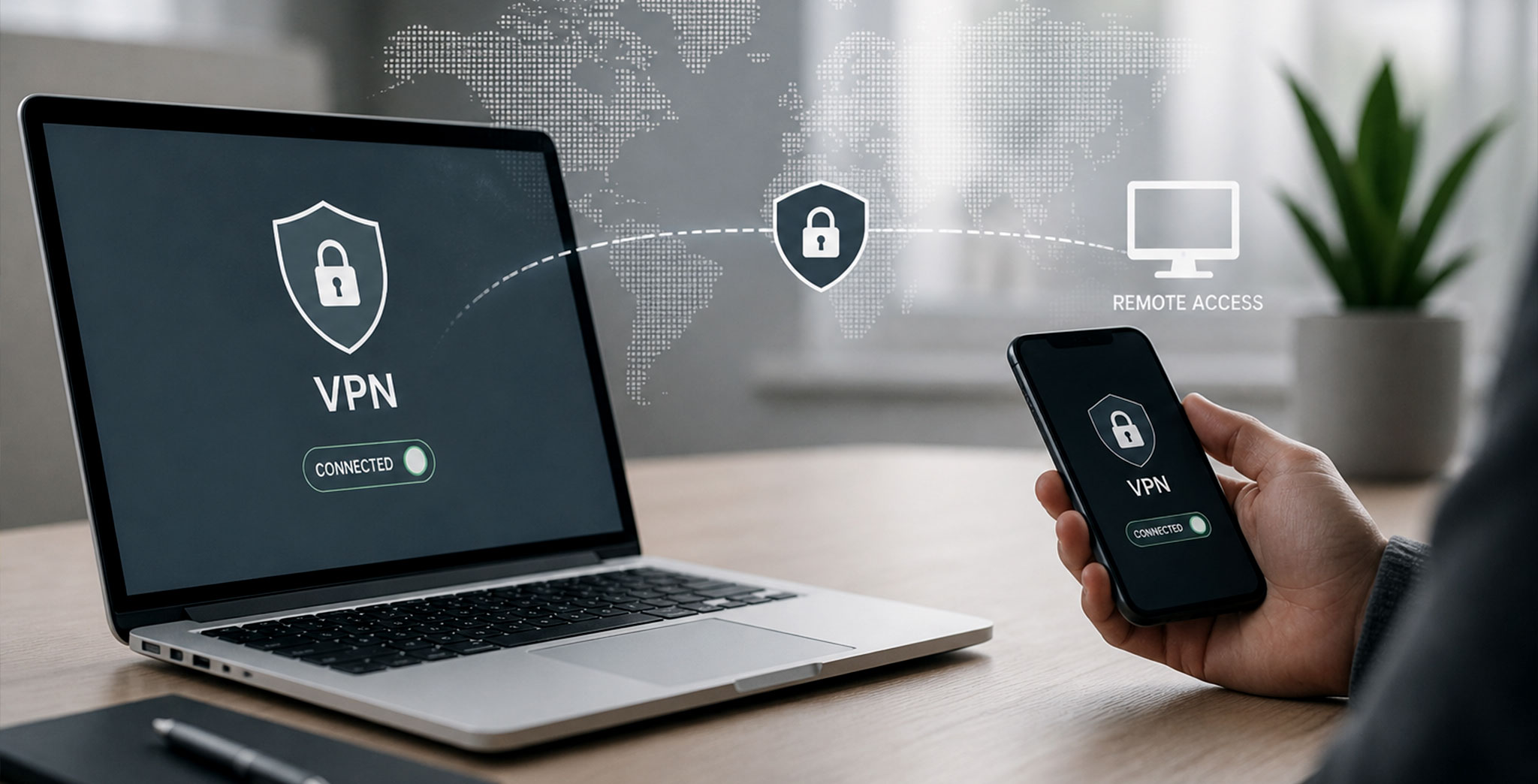
The Importance of VPN in Modern Network Protection
Virtual Private Networks (VPNs) have become a cornerstone of security for organizations relying on remote work, as they provide an encrypted channel that safeguards data during transmission between devices and corporate servers. Scientific studies have shown that not using a properly encrypted VPN significantly increases the likelihood of data interception and espionage . Modern protocols such as AES-256 and SSL/TLS provide strong encryption that renders data unreadable even if intercepted, greatly reducing attack risks. Integrating VPNs with Multi-Factor Authentication (MFA) adds a critical security layer, preventing unauthorized access even if passwords are compromised. Devices like FortiGate and MikroTik support precise role-based access policies, allowing resource restrictions for each employee to reduce the potential attack surface. According to the Microsoft Security Insider report: “Virtual Private Networks are essential to maintaining secure connectivity for remote users and minimizing unauthorized access risks” . Continuous monitoring of network activity, including login times, geolocations, and transmitted data volume, enables early detection of abnormal behavior before it escalates into a breach. Practical experience shows that organizations implementing VPNs with MFA and continuous monitoring reduce security breaches by over 70%, demonstrating the effectiveness of combining technology and strict policies against both internal and external threats. VPNs not only encrypt communications but also protect devices from malware, prevent unauthorized access, and ensure information confidentiality from any remote location, making it a fundamental component of modern network security strategies.
Remote Access Threats and Practical Solutions
Remote access attacks often start with credential theft, exploiting VPN software vulnerabilities, or using unsecured public Wi-Fi networks. Real-world reports indicate that over half of enterprise breaches originated from remote employee accounts rather than direct server attacks (Microsoft, 2022). Practical protection requires implementing strong data encryption using AES-256 or SSL/TLS, combined with MFA for all accounts. Additionally, role-based access control (RBAC) should ensure each employee has only the necessary resource permissions. Activity monitoring and behavioral analytics help detect abnormal login patterns, unusual data flows, and unexpected geolocations, a method proven effective in early threat detection. Regular hardware and software updates fix known vulnerabilities and prevent exploitation. Employee training on phishing and social engineering is essential, as human error remains the leading cause of remote access breaches. As cybersecurity expert Brian Christopher noted: “Even the strongest networks can be compromised if employees ignore secure remote access practices, so training and strict policies are as important as the technology itself”. Real-world implementation combining these measures has reduced successful remote attacks by up to 80% and shortened incident detection time from months to hours, highlighting the need for a comprehensive strategy that merges technology, policy enforcement, and continuous employee education to secure organizations in the era of remote work.
Practical Action List for Immediate Implementation:
-
-
Enable AES-256 encrypted VPN for all remote employees
-
Enforce MFA on all access accounts
-
Apply role-based access control with periodic updates
-
Continuously monitor activity and perform behavioral analytics
-
Regularly update VPN devices and software
-
Train employees on phishing and social engineering
-
Simulate remote attacks to assess network security
-
Explore More Post
Firewalls: Protecting Digital Boundaries in the Modern Era
Read MoreInternal Threats and the Security Mindset
Read MoreShared Hosting and Resource Management
Read More